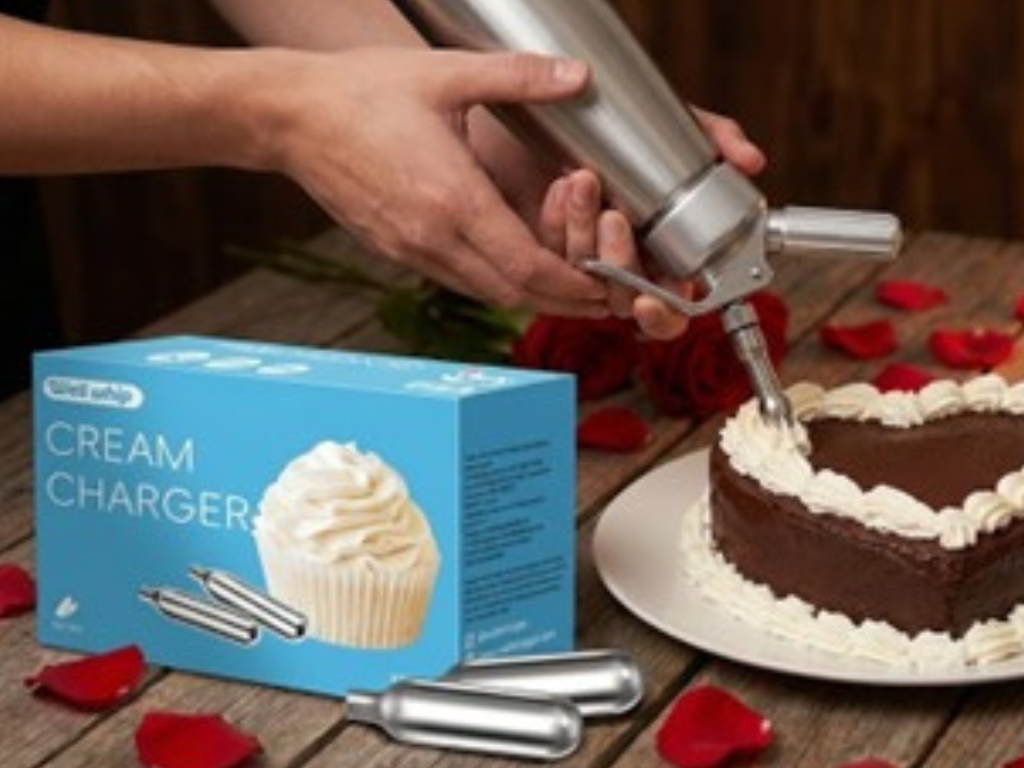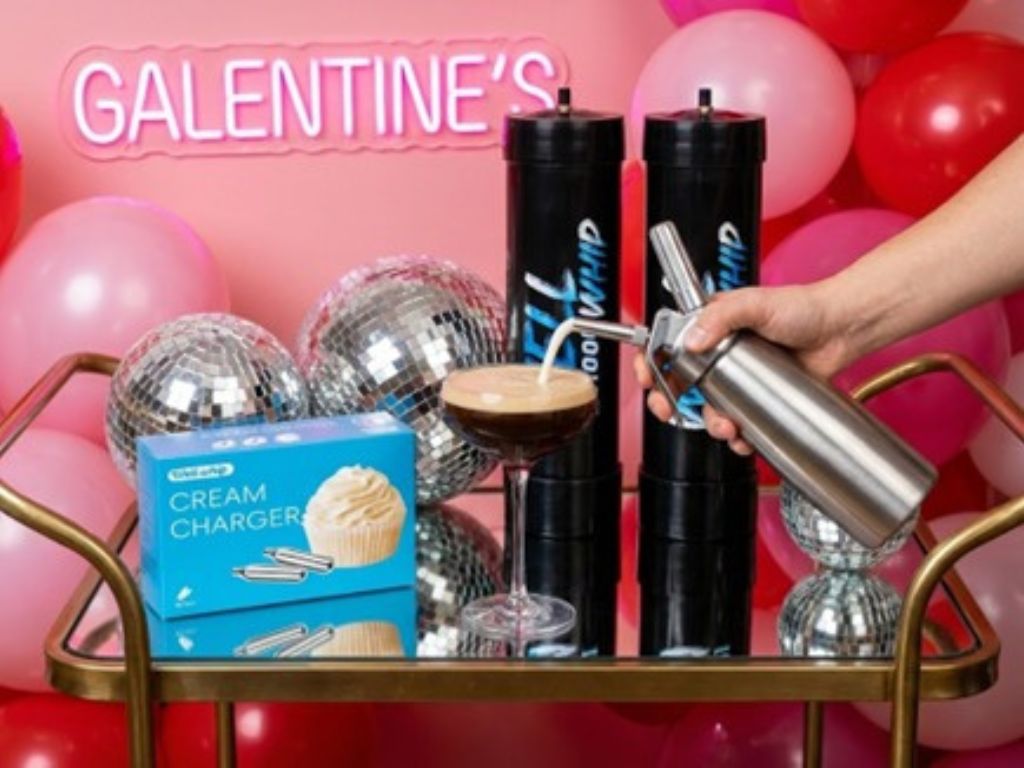

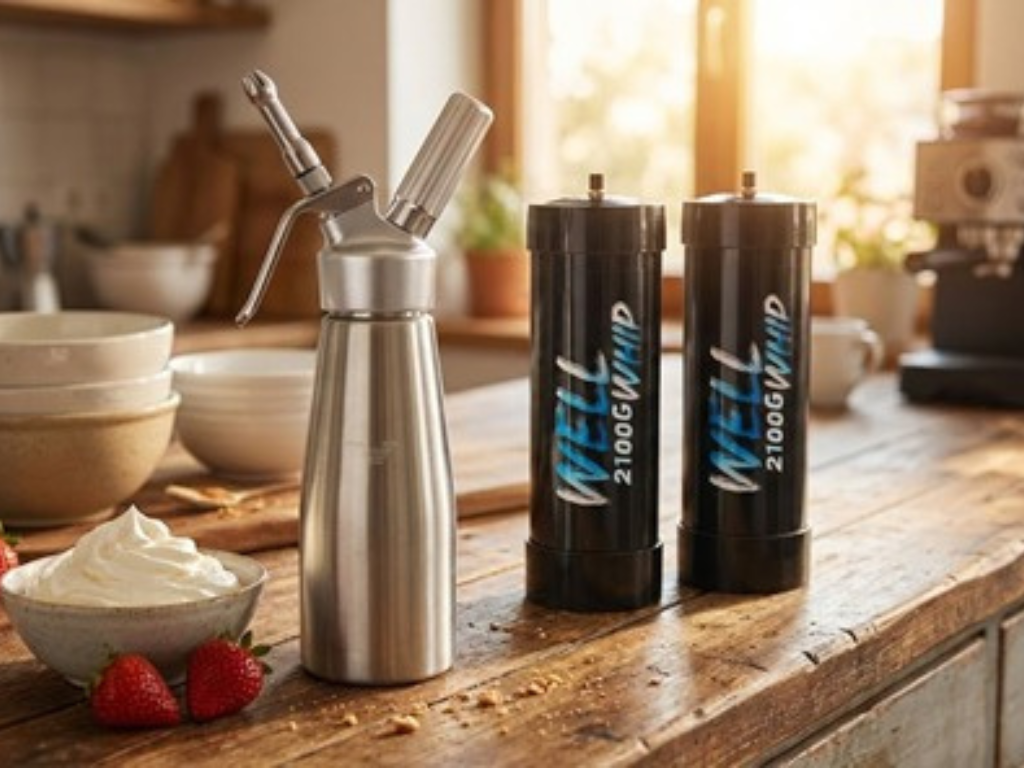
Let me paint you a picture. It’s a Saturday night, your pastry station is humming, tickets are lined up, and you’re in that beautiful flow state where everything just clicks. Then you hear that little metallic click of an empty charger hitting the recycling bin. Then another. And another. Before you know it, you’ve broken rhythm six times just to swap out tiny cylinders, and that flow state? Long gone.
If you’ve ever worked at a high-volume dessert station, you know exactly what I’m talking about. The constant interruption of swapping 8g chargers isn’t just annoying, it’s actively working against your efficiency. Every single change is a tiny friction point. And over the course of a busy shift, those seconds add up to minutes, and those minutes add up to real labor hours lost to a task that should be background noise.
This is exactly why kitchens that figure out the math make the switch to a 3.3L whipped cream tank. It’s not just a bigger cylinder; it’s a complete rethink of how your dessert station flows.
The Number That Changes Everything
Here’s the stat that stopped me in my tracks when I first heard it: one 3.3L N₂O tank holds the equivalent of 262.5 individual 8g cartridges.
Let that sink in for a second. That’s not 50 or 100 that’s over two hundred and sixty charger changes that don’t happen. Two hundred and sixty moments of interruption that simply vanish from your shift.
I remember talking to a bakery owner who was skeptical about upgrading. She’d been using 8g chargers for years and thought the system worked fine. Then she actually counted how many times her team changed chargers during a weekend cake production run. The number was absurd. She switched to a 3.3L tank and called me a week later, almost annoyed at how obvious the solution had been. “It’s like we were intentionally making our lives harder,” she said.
What Maximizing Output Actually Looks Like
When we talk about maximizing output, it’s easy to get abstract. Let’s get specific about what changes when you stop changing chargers every few batches.
Your team stays in the zone. There’s a psychology to kitchen flow. When you’re constantly stopping to perform small maintenance tasks, you never settle into real focus. Removing those interruptions means your pastry chef or barista can actually concentrate on presentation, on consistency, on the craft instead of the mechanics.
Your ticket times drop. It’s simple math. If you save 30 seconds per charger change, and you were going through 50 chargers in a shift, that’s 25 minutes of pure reclaimed time. Time that now goes into plating, into speed, into getting desserts out the pass faster.
Your waste disappears. Inconsistent pressure from cheap or underpowered chargers means the last third of your dispenser often comes out loose and unusable. A high-quality nitrous oxide source with stable pressure means you use every single drop of cream you paid for. That’s not just efficiency; that’s profit.
The Tool That Makes It Possible
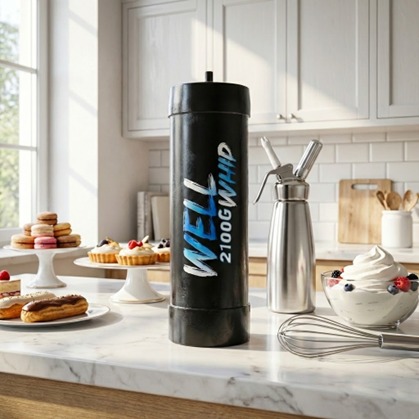
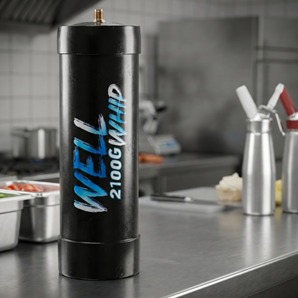
The WellWhip 3.3L charger is built exactly for this scenario. It’s not a home kitchen gadget; it’s a piece of commercial kitchen equipment designed to perform under real pressure.
The tank itself is high-grade stainless steel durable enough to live on a busy line without getting beat up. It ships with a nitrous oxide cream charger nozzle included, so you’re not hunting for adapters or specialized parts. And because it’s filled with pure nitrous oxide gas (N₂O), you get that consistent and reliable pressure batch after batch.
The 2000 grams of gas inside isn’t just a number; it’s the fuel for hours of uninterrupted production. For a catering business doing a large event, for a bakery prepping dozens of cakes, for a coffee shop that goes through lattes by the gallon this is the tool that keeps up.
How to Actually Use It Without Overthinking
If you’re used to tiny cartridges, the 3.3L tank might look intimidating. It’s not. The process is actually simpler.
Step one: Check your gear. Make sure your dispenser or regulator is compatible with 3.3L N₂O tanks. Most professional setups are, but it’s worth confirming.
Step two: Connect it. Screw the tank onto your dispenser or regulator by hand until it’s snug. That’s it. No tools, no wrestling.
Step three: Listen for the hiss. When you break the seal, you’ll hear gas enter your system. That brief sound is normal. If it keeps hissing, you’ve got a connection issue, disconnect and check the seal.
Step four: Shake and go. Give your dispenser a few firm shakes to distribute the gas, and you’re ready to produce. And you’ll keep producing for a long, long time before you need to think about this tank again.
The Math That Makes Sense for Your Business
Let’s talk about money, because that’s what ultimately matters. Yes, a 3.3L tank costs more upfront than a box of 8g chargers. But the cost-per-serving tells a very different story.
When you factor in the labor saved, the waste eliminated, and the bulk purchasing efficiency, the larger format wins every time. For a high-volume dessert production environment, it’s not even close. It’s the difference between paying for convenience and paying for a system that actually supports your volume.
Plus, with multiple purchase options (1 tank, 2 tanks, 10 tanks), you can scale your ordering to match your production without overcommitting.
From Constant Interruption to Seamless Production
The real magic of the 3.3L tank isn’t in the specs, it’s in how it changes the feeling of your kitchen. Instead of a station that’s constantly stopping and starting, you get a smooth, continuous flow. Instead of staff frustration at yet another tiny task, you get to focus on the work that actually matters.
I’ve watched kitchens make this switch and literally see stress levels drop. It sounds dramatic, but when you remove a hundred small annoyances from someone’s day, they notice. They have more energy for the creative parts of the job. They plate better. They move faster. And at the end of a long shift, they’re less exhausted.
That’s the real advantage of a 3.3L whipped cream tank. It’s not just about gas; it’s about giving your team back their rhythm.
Ready to see what uninterrupted flow feels like in your kitchen? The WellWhip 3.3L N₂O charger is waiting to become the most reliable tool on your line. Give it a shot your ticket times will thank you.